茶道とは Qu'est-ce que le chanoyu ? What is Chanoyu? SADŌ · CHADŌ Sadō · La voie du thé Sadō · The Way of Tea
「茶の湯」は、亭主が客を招き、心を尽くして一服の抹茶を点てる、日本独自の総合芸術です。 « Chanoyu » — littéralement « l'eau chaude pour le thé » — désigne l'art japonais de recevoir un hôte autour d'un bol de matcha préparé avec une attention pleine. "Chanoyu" — literally "hot water for tea" — is the Japanese art of receiving a guest around a single bowl of matcha, prepared with complete and quiet attention.
茶の湯は、単なる飲み物の供応ではありません。茶室の建築、露地の設え、掛物や花、釜と茶碗の選び、所作の一つひとつに至るまで、亭主の心遣いが宿ります。客はその心を受け取り、互いに敬意を交わす——この一椀の時間は、二度と巡り来ない。これを「一期一会」と申します。 Le chanoyu n'est pas une simple dégustation. L'architecture de la chaumière de thé, le jardin de mousse, le rouleau calligraphié, la fleur de saison, le choix du bol et de la marmite — tout porte le soin du maître. L'invité reçoit cette intention, et chacun se rend mutuellement honneur. Cet instant ne reviendra jamais : c'est ichi-go ichi-e, « une fois, une rencontre ». Chanoyu is not merely the serving of a drink. The architecture of the tea hut, the moss garden path, the hanging scroll, the seasonal flower, the choice of bowl and kettle — every detail carries the host's care. The guest receives that intention, and each honours the other. The moment will never come again: this is ichi-go ichi-e, "one time, one meeting".
十六世紀、千利休が「侘び茶」を大成して以来、茶の湯は禅の精神と深く結びつき、和敬清寂——和、敬、清、寂——の四規を旨としてきました。 Depuis que Sen no Rikyū a fixé l'esthétique wabi au XVIᵉ siècle, le chanoyu reste indissociable de l'esprit zen. Quatre principes le gouvernent : Wa (harmonie), Kei (respect), Sei (pureté), Jaku (tranquillité). Since Sen no Rikyū perfected the wabi aesthetic in the sixteenth century, chanoyu has remained inseparable from the spirit of Zen. Four principles govern it: Wa (harmony), Kei (respect), Sei (purity), and Jaku (tranquility).
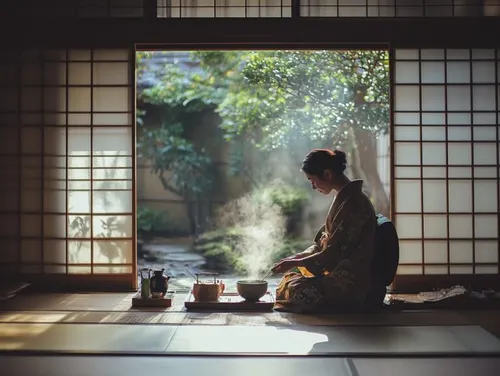
露地と茶室 Le jardin et la chaumière The Garden & the Tea Hut ROJI · CHASHITSU Roji · Chashitsu Roji · Chashitsu
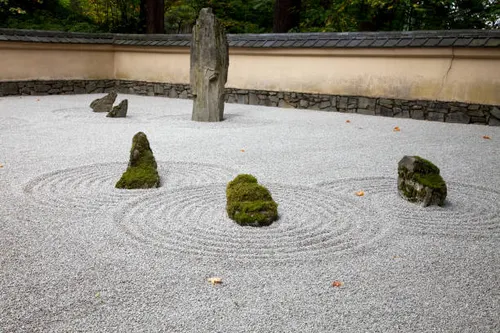
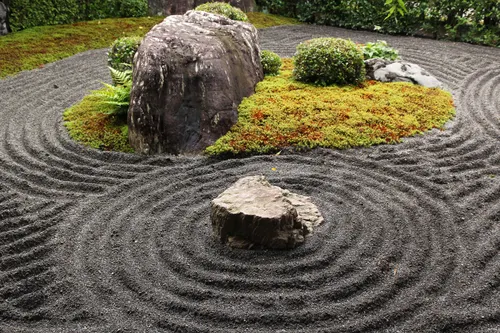
客は、まず露地と呼ばれる小径を辿ります。蹲踞で口と手を清め、世俗の塵を払い、躙口より茶室へと身を屈めて入る。低い入口は、身分や肩書を脱ぎ、皆が等しく一座に集うという意を示します。 Le visiteur traverse d'abord le roji, ce sentier de mousse et de pierres qui sert de seuil. À la vasque de pierre il purifie sa bouche et ses mains, dépose la poussière du monde, puis franchit en s'inclinant la petite entrée du pavillon. Cette porte basse, le nijiri-guchi, fait que chacun, prince ou paysan, entre dans la même posture d'humilité. The guest first walks the roji — a moss-and-stone path that serves as a threshold. At the stone basin they rinse mouth and hands, leaving the dust of the world behind, and then stoop through a small doorway into the tea room. That low entrance, the nijiri-guchi, ensures that prince and peasant alike enter in the same posture of humility.
茶の湯の要素 Les éléments essentiels The Essential Elements 道具と作法 Ustensiles · Étiquette Utensils · Etiquette
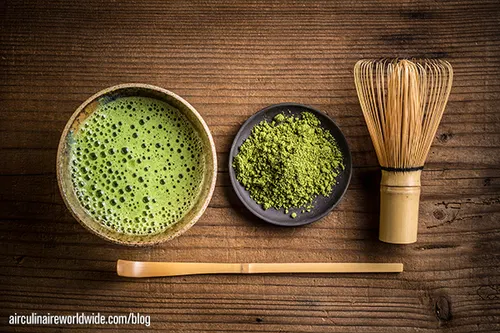
茶筅 Chasen Chasen CHASEN Le fouet de bambou Bamboo whisk
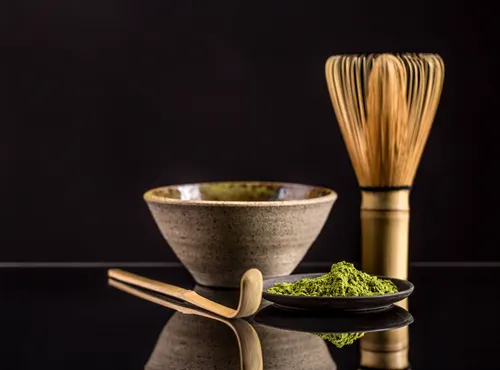
一本の竹から削り出された、八十本前後の細い穂を持つ茶筅。これで抹茶と湯を素早く攪拌し、ふくよかな泡を立てます。 Taillé d'une seule pousse de bambou, le chasen porte environ quatre-vingts dents fines. C'est lui qui mêle la poudre et l'eau, et fait monter la mousse soyeuse du matcha. Carved from a single piece of bamboo, the chasen bears some eighty fine tines. With it the powder and water are blended and the silken matcha foam is raised.
茶碗 Chawan Chawan CHAWAN Le bol à thé Tea bowl
楽焼、萩焼、唐津——亭主は、季節と客に応じて茶碗を選びます。その肌、その重み、その温もりも、もてなしの一部です。 Raku, Hagi, Karatsu — l'hôte choisit le bol selon la saison et l'invité. Sa matière, son poids, sa chaleur dans la paume font partie intégrante de l'accueil. Raku, Hagi, Karatsu — the host chooses each bowl to suit the season and the guest. Its clay, its weight, its warmth in the palm are themselves part of the welcome.
釜 Kama Kama KAMA · TETSUBIN La marmite de fer Iron kettle
炉や風炉に掛けられた鉄釜から、松風のような湯の音が立ちのぼる。この音もまた、茶席を整える大切な趣向の一つです。 De la marmite de fer suspendue au-dessus du foyer monte le murmure de l'eau, semblable au vent dans les pins. Ce son aussi compose l'atmosphère de la cérémonie. From the iron kettle hung above the hearth rises the soft hiss of the water, likened to wind in the pines. Even that sound is part of the room's composition.
茶杓 · 棗 Chashaku · Natsume Chashaku · Natsume CHASHAKU · NATSUME Cuillère & jarre à thé Tea scoop & caddy
竹の茶杓で抹茶を掬い、漆塗りの棗から茶碗へと運ぶ。一杓ごとの所作にも、亭主の修練が宿ります。 Le chashaku de bambou puise la poudre dans le natsume laqué, pour la déposer dans le bol. Chaque geste, mesuré, témoigne des années d'exercice du maître. The bamboo chashaku lifts the powder from the lacquered natsume into the bowl. Each measured movement reflects years of the host's practice.
作法 Étiquette Etiquette REIHŌ Reihō · Le bon usage Reihō · The forms
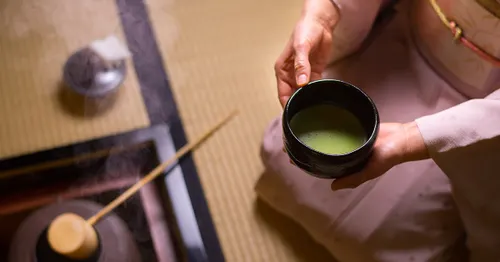
茶碗を二度回し、正面を避けていただく。一口めを味わい、亭主を褒める。これらの作法は、形式ではなく、互いへの敬意の表れです。 Tourner le bol deux fois pour ne pas boire sur sa face décorée, savourer la première gorgée, remercier l'hôte : ces formes ne sont pas des conventions vides, mais l'expression visible du respect mutuel. Turning the bowl twice so as not to drink from its decorated face, savouring the first sip, thanking the host: these forms are not empty conventions but the visible language of mutual respect.
床の間 Tokonoma Tokonoma TOKONOMA L'alcôve The alcove
茶室の床には、季節を映す掛物と一輪の茶花。客は座に着く前に、まずこれに対して礼をいたします。 Dans l'alcôve, un rouleau calligraphié et une fleur unique annoncent la saison et le thème du jour. L'invité s'incline devant eux avant de prendre place. In the alcove hangs a calligraphed scroll and a single seasonal flower, announcing the spirit of the day. The guest bows to them before taking their seat.
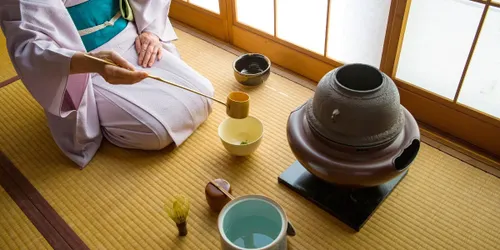
湯の音、松風の如し L'eau, le feu, le silence Water, Fire, Silence KAMA & SUMI Le foyer du chanoyu The hearth of chanoyu
十一月から四月までは、畳の下に切られた炉に釜を掛けます。夏は風炉に。炭の熾し方、湯の温度、釜の鳴る音——亭主は半年も前からこの一席のために準備をいたします。 De novembre à avril, la marmite est suspendue au-dessus d'un foyer creusé dans le tatami ; l'été venu, elle prend place sur un brasero portatif. La disposition du charbon, la température exacte de l'eau, le chant du métal : l'hôte prépare une telle séance des mois à l'avance. From November through April, the kettle hangs above a sunken hearth cut into the tatami; in summer, it rests upon a portable brazier. The arrangement of charcoal, the precise temperature of the water, the singing of the iron — the host prepares for such a gathering months in advance.
「茶はただ湯を沸かし、茶を点てて、飲むばかりなる事と知るべし。」 « Sache que le thé n'est rien d'autre que ceci : faire bouillir l'eau, préparer le thé, et le boire. » "Know that the tea ceremony is nothing more than this: boil the water, make the tea, and drink it."— 千利休 · SEN NO RIKYŪ — Sen no Rikyū (1522–1591) — Sen no Rikyū (1522–1591)
三千家 Les trois écoles Sen The Three Sen Schools SAN-SENKE San-Senke San-Senke
千利休の子孫により受け継がれた三つの流派は、今日に至るまで日本の茶道を導いてまいりました。 Trois lignées issues des petits-fils de Sen no Rikyū transmettent depuis quatre siècles l'esprit du fondateur. Three lineages, descended from the grandsons of Sen no Rikyū, have transmitted the founder's spirit for four centuries.
裏千家
Urasenke最も広く海外にも知られ、家元は今日庵に伝わる。柔らかく流麗な点前を特色とする。 La plus largement diffusée à l'étranger, dont la maison-mère est Konnichi-an à Kyoto. Sa pratique est reconnue pour sa souplesse et sa fluidité. The most internationally known, with its headquarters at Konnichi-an in Kyoto. Its practice is admired for its softness and flowing grace.
表千家
Omotesenke家元は不審菴。利休以来の伝統を最も色濃く伝え、簡素で厳格な様式を守る。 La maison de Fushin-an. Elle conserve le style le plus dépouillé et le plus austère, fidèle à l'enseignement de Rikyū. Based at Fushin-an, it preserves the most austere and unadorned style, faithful to Rikyū's own teaching.
武者小路千家
Mushakōji-senke家元は官休庵。実用と合理を重んじる気品ある作法で知られる。 Établie à Kankyū-an, elle se distingue par une étiquette d'une élégante sobriété, où l'économie du geste est érigée en principe. Centered at Kankyū-an, it is distinguished by an elegant economy of movement, where every gesture is pared down to its essential form.
茶の湯の歴史 Brève histoire du chanoyu A Brief History REKISHI Du IXᵉ siècle à nos jours From the 9th century to today
大陸より茶来たる L'arrivée du thé depuis la Chine Tea arrives from China
遣唐使や留学僧によって、唐の茶が初めて日本にもたらされる。 Des moines envoyés en Chine rapportent les premières graines et les premiers usages du thé à la cour impériale. Monks returning from Tang-dynasty China bring the first seeds and customs of tea to the imperial court.
栄西禅師、抹茶を伝う Le moine Eisai introduit le matcha The monk Eisai brings matcha
禅僧栄西が、宋より粉末状の抹茶を持ち帰り、『喫茶養生記』を著す。茶は禅と結びつき、武家社会に広まる。 Le moine zen Eisai rapporte de la Chine des Song la poudre de thé vert et compose le Kissa Yōjōki. Le thé devient inséparable du zen et gagne la classe guerrière. The Zen monk Eisai returns from Song China with powdered green tea and writes the Kissa Yōjōki. Tea becomes inseparable from Zen and spreads through the warrior class.
侘び茶の萌芽 · 村田珠光 L'éveil du wabi-cha · Murata Jukō The rise of wabi-cha · Murata Jukō
村田珠光が、質素な草庵にて茶を点てる「侘び茶」の原型を打ち立てる。 Murata Jukō imagine de préparer le thé dans une chaumière modeste, posant les fondations de l'esthétique wabi : la beauté du dépouillement. Murata Jukō begins to serve tea in a plain, grass-roofed hut, laying the foundations of the wabi aesthetic — the beauty of the unadorned.
千利休、茶の道を大成す Sen no Rikyū parachève la voie du thé Sen no Rikyū perfects the Way of Tea
織田信長、豊臣秀吉に仕えた茶頭、千利休は、二畳の小間と楽茶碗を生み、茶の湯を完成へと導いた。和敬清寂、一期一会の精神は、今日に至るまで茶人の指針である。 Maître de thé d'Oda Nobunaga puis de Toyotomi Hideyoshi, Sen no Rikyū crée la chaumière de deux tatamis et le bol Raku. Son enseignement — wa, kei, sei, jaku et ichi-go ichi-e — demeure aujourd'hui encore la boussole de toute pratique du thé. Tea master to Oda Nobunaga and then Toyotomi Hideyoshi, Sen no Rikyū creates the two-mat hut and the Raku bowl. His teaching — wa, kei, sei, jaku and ichi-go ichi-e — remains to this day the compass of every tea practitioner.
三千家の確立 Fondation des trois écoles Sen The founding of the three Sen schools
利休の孫、宗旦の三子により、表千家・裏千家・武者小路千家が分かれ、今日まで続く三千家の系譜が確立される。 Les trois fils du petit-fils de Rikyū fondent les écoles d'Omotesenke, d'Urasenke et de Mushakōji-senke, qui se transmettent encore aujourd'hui. The three sons of Rikyū's grandson found the Omotesenke, Urasenke and Mushakōji-senke schools, whose lineages continue unbroken to this day.
世界へ広がる茶の心 L'esprit du thé rayonne dans le monde The spirit of tea travels the world
茶の湯は、五大陸の稽古場で受け継がれ、ことに裏千家は、世界各地に出張所を設け、平和の文化として茶の心を伝え続けている。 Pratiqué sur les cinq continents, le chanoyu — porté notamment par les antennes internationales d'Urasenke — est aujourd'hui reconnu comme un art de la paix. Practised on five continents and carried abroad in particular by the international branches of Urasenke, chanoyu is today recognised as an art of peace.
情景 Tableaux du thé Scenes of the Tea JŌKEI Galerie Gallery
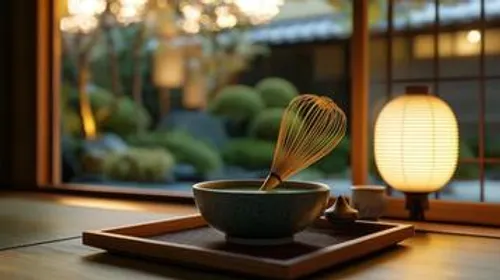
一期一会
「一期一会」— この一度の出会いを、いのちの全てを以て大切に。 « Ichi-go ichi-e » — une seule fois, une seule rencontre. Honore-la de toute ta présence. "Ichi-go ichi-e" — one time, one meeting. Honour it with the whole of your presence.